Tensile Structure Guide
Tensile Structure for Schools & Colleges: Complete Guide
A planning guide for school assembly areas, walkways, sports courts, entrances and pickup zones.
Quick answer: For education campuses, prioritize safeguarding, drainage, clear circulation, supervision, fire requirements and predictable maintenance. Tensile roofs work well over assembly areas, play courts, walkways and pickup zones when the structure is engineered for local weather and campus use.
Where tensile roofs add value on campus
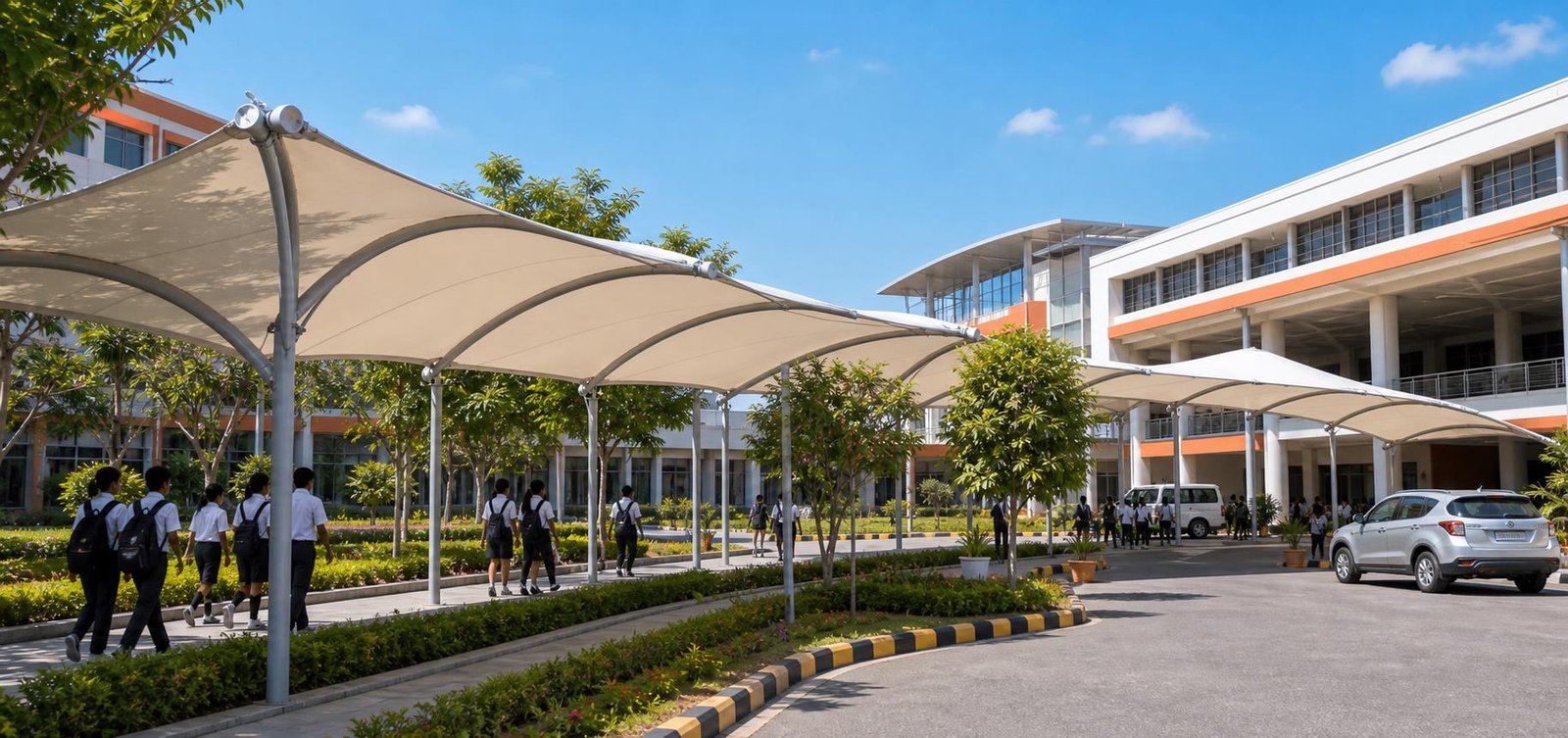
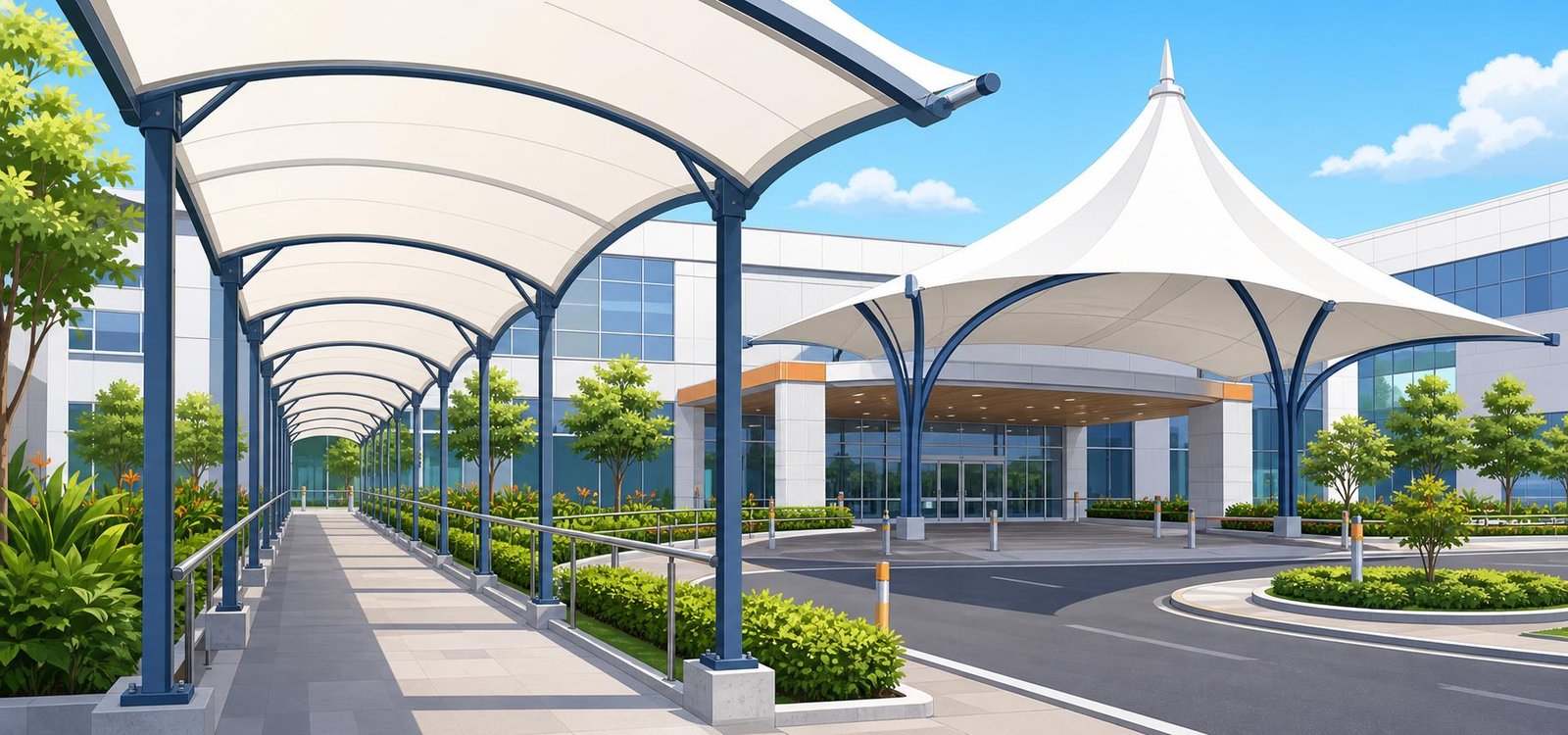
Assembly courts need broad weather protection and good sight lines. Walkway canopies connect blocks during sun and rain. Sports courts need higher clearances and column positions outside active zones. Entrance and pickup canopies improve queue comfort without restricting bus or emergency movement.
A phased campus plan can standardize colours, column shapes and edge details across several locations. Repetition supports a coherent identity and easier maintenance. Each use still needs its own clearance, drainage and crowd-capacity review; a small entrance canopy detail should not simply be enlarged for an assembly area.
Safety and comfort considerations
Keep sharp edges, cables and climbable elements away from students. Protect columns in play or vehicle zones and maintain visibility for supervision. Rainwater should discharge into safe drainage rather than across steps, ramps or circulation. Night lighting and CCTV can be coordinated without unauthorized attachments later.
Translucent fabric can provide useful daytime brightness, but glare and heat depend on orientation, colour and openness. Acoustic reflection matters for assemblies. Fire performance, exits, lightning protection interfaces and local approvals should be reviewed by the responsible project professionals.
Procurement and school operations
Plan noisy civil and erection work around school hours and exams. Separate work zones securely, define delivery routes and confirm crane or scaffold access. Survey underground services before foundations. The programme should allow design approval, procurement and weather delays rather than assuming all work occurs during a short holiday.
Handover should include drawings, fabric and coating information, warranties, cleaning guidance and an inspection schedule. Campus teams should know whom to contact after storms or accidental impact. A maintenance budget keeps drainage, coatings and membrane interfaces in dependable condition.
How to plan your project
Start with the use case rather than a material name. Record the covered dimensions, clear height, column restrictions, pedestrian or vehicle movement, drainage path, nearby buildings and installation access. Share site photographs and a basic layout, then arrange a physical survey before freezing the quotation. A responsible proposal should state what is included: design basis, fabric or cladding specification, structural steel, foundations, drainage accessories, coating, transport, lifting, installation, taxes and warranty.
Budget comparisons are meaningful only when the scope is equal. One quote may exclude foundations, edge cables, gutters, crane access or painting while another includes them. Ask each bidder to identify material brand and grade, membrane weight or roof thickness, steel specification, corrosion-protection system, design wind criteria and exclusions. Do not select a permanent outdoor structure only by the lowest per-square-foot figure.
The normal delivery sequence is requirement review, site measurement, concept, budget confirmation, engineering, client approval, procurement, workshop fabrication, foundation preparation, dispatch, installation and final inspection. Weather and civil readiness can affect the schedule. Keep drawing approvals and change requests in writing, confirm who coordinates electricity or equipment at site, and provide a safe storage and working area for the installation team.
Maintenance should be planned at handover. Preserve material certificates, drawings, warranties and photographs. Inspect the structure after severe weather and at routine intervals for blocked drains, loose hardware, coating damage, abnormal deflection, membrane abrasion or water ponding. Cleaning products and access methods must suit the selected surface. Repairs should be assessed early; unapproved drilling, welding or attachment of signage can change loads and invalidate warranties.
Engineering, approvals and lifecycle value
An outdoor roof is a structural system, not only a fabric or cladding purchase. The responsible project team should define design wind actions, imposed loads, drainage assumptions, support reactions and foundation criteria for the actual location. Soil conditions, neighbouring roofs and terrain exposure can change the engineering. Architectural drawings, structural calculations and statutory submissions should be coordinated by qualified professionals as required by the local authority and project type. Product marketing figures cannot replace project engineering.
Lifecycle value includes how reliably the roof performs, how easily it can be inspected, and what eventual repair or replacement requires. A slightly higher initial specification may be sensible when access is difficult, downtime is costly or appearance is business-critical. On the other hand, a straightforward, replaceable PVC membrane may be the rational choice for a modest canopy. Document the decision, expected service conditions, warranty limitations and maintenance responsibility so the owner understands both the benefit and the continuing obligation.
For a site-specific recommendation, review our school tensile structures service page or request a site visit. Maasidhi Catalyers works across Delhi, Haryana, Odisha and other Indian locations according to project scope and site readiness.